Design Buddies Community · Facilitation · Design Education · UX Practice
Stop designing.
Start questioning.
“Most designers know what good UX looks like. Very few have practiced the decisions that produce it, the prioritization under constraints, the moment you realize you designed for the wrong person, the discipline to question the brief before opening Figma.”
Role
Facilitator & Lead Designer
Participants
Emerging designers & PMs
Format
Full-day design sprint
Location
Vancouver, BC
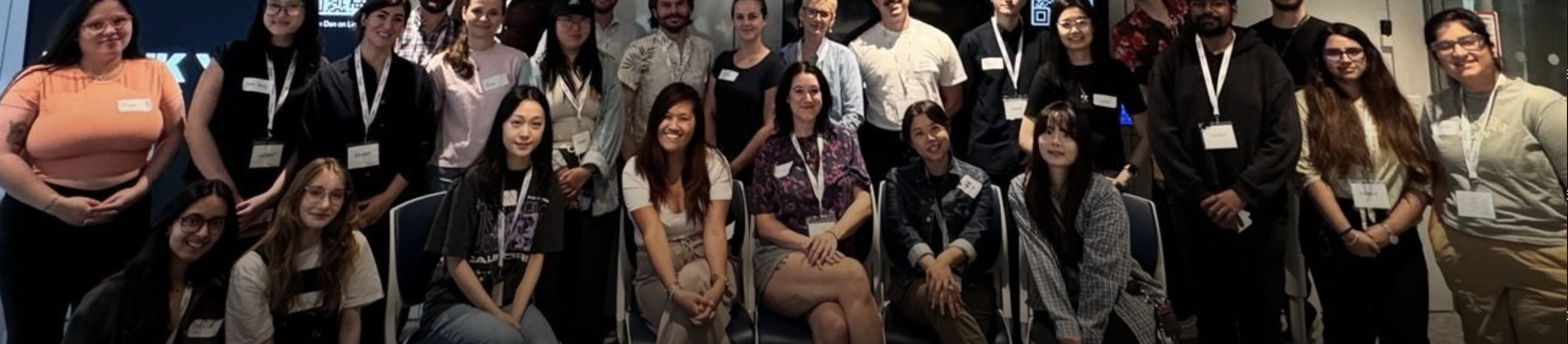
Why I ran this
The gap isn't knowledge, it's practice under real constraints.
After years working across enterprise B2B, AI products, and complex platforms, one pattern became clear: designers who struggle aren't short on frameworks. They're short on reps. They haven't had enough chances to make a real design decision, with incomplete information, competing constraints, and something actually at stake.
I ran this workshop to give a cohort of designers exactly that. A structured day where the exercises aren't hypothetical, the feedback is direct, and the goal isn't a deliverable, it's a sharper instinct for how to approach the work.
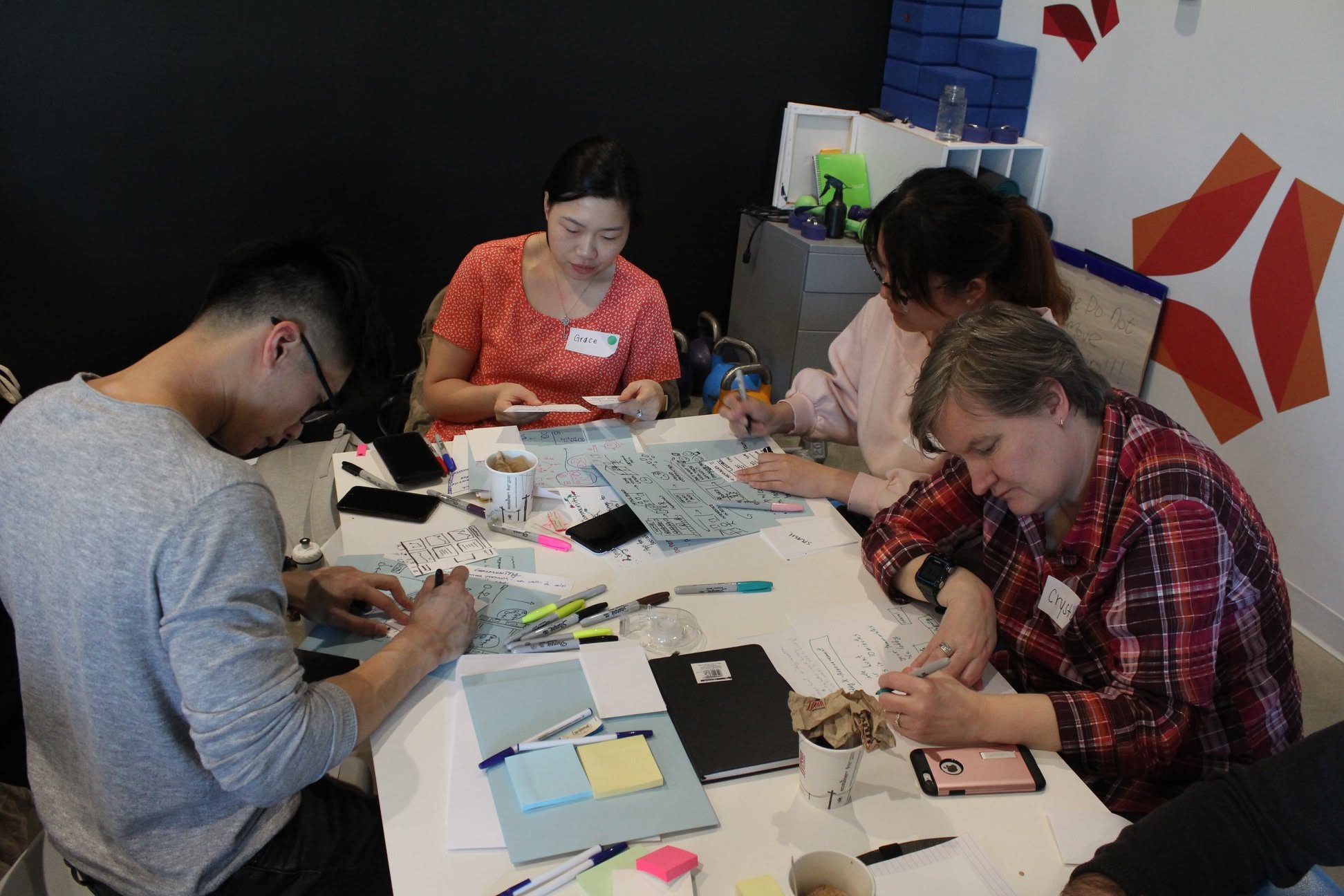
Teams working through the assumption mapping exercise, no Figma, just thinking out loud on paper.
What I focused on
Three things I teach every designer who wants to work at a senior level.
These aren't workshop activities for their own sake. They're the thinking habits that separate designers who execute briefs from designers who shape them.
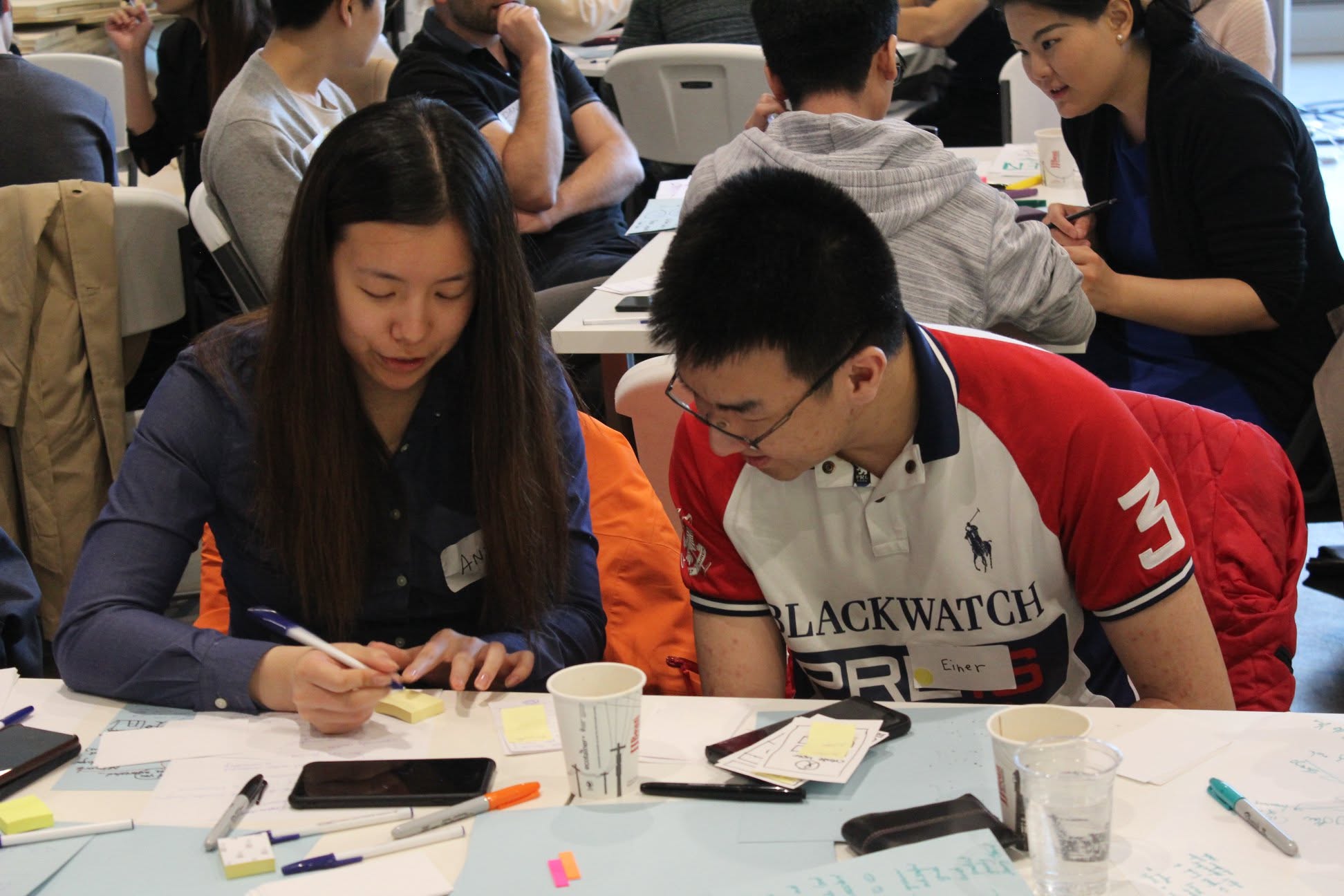
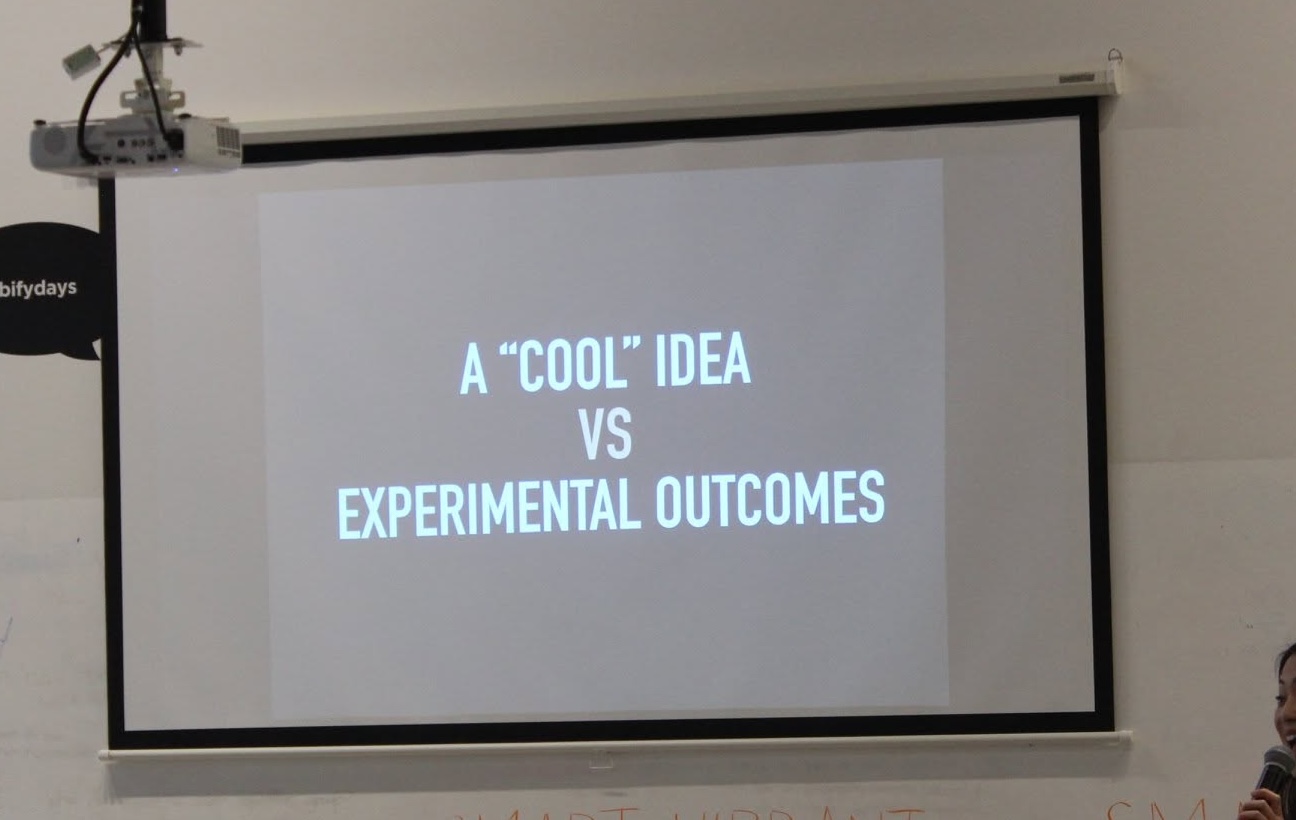
Left: rapid sketching, constraints on purpose, screens off-limits. Right: the framing that opens the afternoon session.
What I've seen shift
Designers leave talking about problems, not features.
The clearest signal that a session has worked: by the afternoon, teams stop talking about what to build and start talking about what they don't know yet. That shift, from solution-first to question-first, is the whole point.
I've watched designers spend a full morning convinced they understood their users, then spend twenty minutes on a journey map and find three friction points they hadn't considered. That's not a failure of the morning, it's the workshop doing its job.
“The brief is a hypothesis. The journey map is your first research artifact. The prioritization matrix is your first product decision. Everything else is execution.”
How I open every session
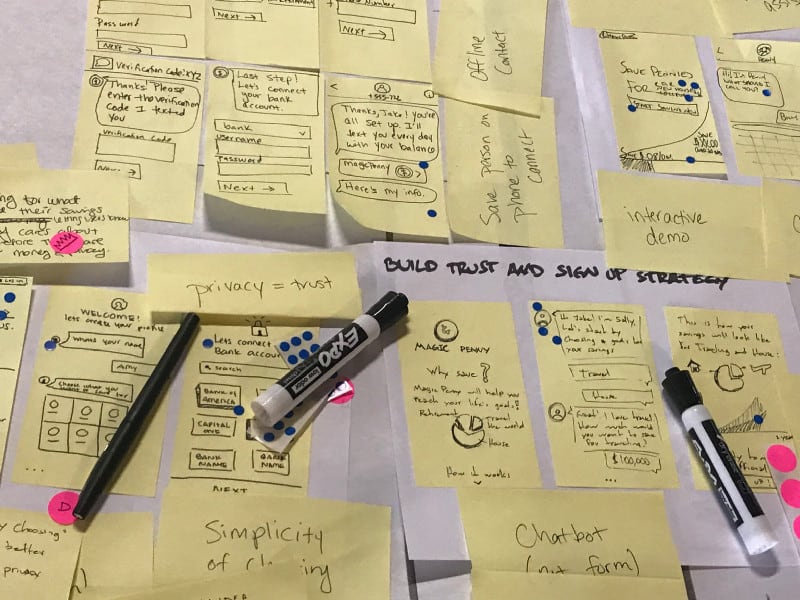
Sketch artifacts from a sign-up strategy exercise, lo-fi on purpose. Fidelity is a distraction when you're still figuring out the problem.
Why this matters to me
Good design education is the same skill as good design.
Figuring out what someone actually needs, then building the clearest possible path to get them there, is what I do in product work every day. Facilitation is the same problem with a different output. The room is the product. The participants are the users. The session structure is the interaction model. I take it just as seriously.